Octavian Nothing
Art By: Asher
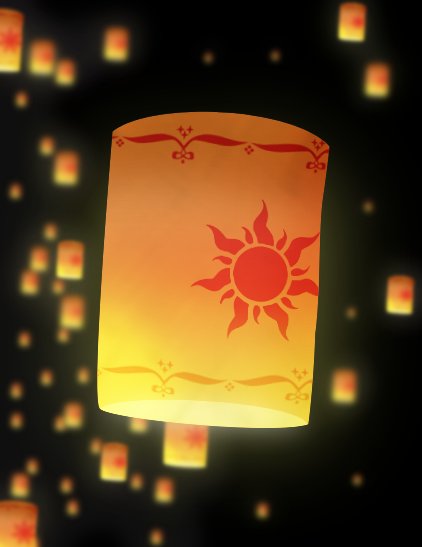 |
| The Lantern |
This is the lantern that is described at the beginning of the story. Servants would light lanterns and they would rise into the sky until they burn out and fall to the ground. A quote from Octavian “How doth all that seeks to rise burn itself to nothing”. This means that people who rise to power just fall or fail in the end.
Vocab By: Ani
- Cranium
As it Appears in the Novel:“… my head in its long-rotted cranium, my body curled behind it…”
Definition: the skull, especially the part enclosing the brain.
Part of Speech: Noun
New Sentence: The apes’ cranium is not that different than that of humans.
- Murk
As it Appears in the Novel:“… some nightmare tadpole waiting to burst from the murk and reinstate its reign upon the genteel fields of earth.”
Definition: darkness or thick mist that makes it difficult to see.
Part of Speech: Noun
New Sentence: The submarine took off into the murk, using only a small headlight to see where it was going.
- Excrement
As it Appears in the Novel:“… record the weight of my own excrement, the men of the house daily performed this calculation for me.”
Definition: waste matter discharged from the bowels; feces.
Part of Speech: Noun
New Sentence: The dog’s excrement was disgusting on such a hot, sunny day.
- Inviolability
As it Appears in the Novel: “… the regulations by which I was raised, and the extreme purity and inviolability of their conception.”
Definition: the quality of being inviolable; prohibiting violation; secure from destruction, violence,
Part of Speech: Adjective
New Sentence: The ruler was so supported by his people that he was practically inviolable; any of his people would die in his place if he was threatened.
- Obsequiousness
As it Appears in the Novel: “She hearkened little to the insinuations of flattery or the curtseys of obsequiousness, but returned all idle, pretty chatter in its own coin.”
Definition: the quality of being obsequious; servilely compliant or deferential.
Part of Speech: AdjectiveNew Sentence: The obsequiousness of the servant was greatly appreciated by his master.
Rhetoric By: Gabe
- Device #1
When Octavian buries himself in the dragon skull, the skull is a symbol for grief; Octavian feels like his loss of his dog lets him relate to the dragon’s loss of life. “…They found my body lain out behind it, and my head within the monster’s flat head… as if my tiny body inhabited the beast and I had always inhabited it.”
- Device #2
Bono is a foil character to Octavian. Octavian is curious and naïve, while Bono understands his situation. “’You didn’t know,’ [Bono] said again. ‘You did not know?’”
- Device #3
The forbidden room is a symbol for Octavian’s hidden past. Even though he unlocks it, he still cannot fully understand it. “Perhaps I had expected masks and robes and all the imagined gimcrackery of cultism… perhaps, merely, I had wished for these things, knowing too well what I would find instead.”
- Device #4
Octavian and his mother had never been treated like slaves by the philosophers, so it is ironic when they are punished at the hand of someone other than their owner. “Guests and servants standing around us, silent as they witnessed these cruel solemnities, Lord Cheldthorpe’s valet and his footman took turns whipping us with the rod.”
- Device #5
Octavian asks why time moves forward, and 09-01 responds, “Because we have eyes on the front of our heads.” This is a Metaphor which means that as humans, we only pay attention to what is ahead of us, and not so much to what is behind.
Context By: Ned
- M. T. Anderson was inspired by the Revolution war.
- The conflict was about they didn’t know the colonists would be the victor.
- His mother, Cassiopeia, was an African princess.
- He lived in Stow, Massachusetts and took his history for granted and another reason that he was inspired.
- On the cover of the book it said “The Pox Party” and its this horrible disease that was “popular” in the 1700’s and that is why Octavian is not let outside for long.
Authors note, A Conversation with M. T. Anderson,
Disscussion By: Megan
1) Discussion Question #1
Did it seem to you that near the middle/beginning of the section, Octavian’s mother made him feel as if he was one of the ordinary men who longed for her attention? Did their punishment seem to bring them closer together? Why or why not?
- Ned:His mother didn’t make him feel that way, philosophers and Lord Cheldthorpe did.
- Ani: He thought his mother was treating him the same when really it was just him acting similar to those who were treated that way. -The punishment- The relationship did not change. She loves him the same. If anything Octavian was more protective of his Mother than his Mother was of him.
- Gabe: Same as Ned, (collaboration in class)
- Megan: (Agree with Ani) The punishment brought them closer together because they both “fell” together. They were high up (like the lanterns), and burnt out in the same moment. Suffering like that would certainly bring her closer to someone.
- Asher: Punishment did sort of bring them together because Octavian defended his Mother despite the consequences.
2) Discussion Question #2
Does Princess Cassiopeia resemble anyone in your life; Do you see that person as someone who is appears to be “perfect”? What struggles do you think they might go through silently that Cassiopeia maybe shares?
- Ned: No, nobody in my life is “perfect.”
- Ani: For everyone, at least up to a certain age, parents and adulthood seem perfect. Young children often think that his/her mother/father is “perfect” and that when they are adults, their lives will be perfect as well. Although as people grow up they mature and realize that “growing up” is not perfect, young kids are often tricked by the illusion of parents and other adults being perfect.
- Gabe: No not realy
- Megan: I see people look upon me this way and it causes a lot of pressure and or stress that I try to hide. Even though people don’t say flat out “Wow you’re perfect”, you can tell by little comments or remarks that people expect an almost ridiculous standard. I think Cassiopeia might struggle silently with these problems too.
3) Discussion Question #3
Put yourself in 13 year old slave Cassiopeia’s position. Would you accept the offer to attend the College of Lucidity with your baby if you did not know what Section 1 told you? What if you did know? Why or why not?
- Ned: Yes, because it is better than the alternatives of possibly being sold to cruel slave owners.
- Ani: If, as a thirteen-year-old pregnant slave, I was offered the chance to live and work in a place called the “College of Lucidity”, I would accept, with or without knowledge give to the audience in section one. Simply the elegant name would be reassuring, and it would be better than, as Ned said, being sold to cruel owners.
- Gabe: Yes because you get to got to a college and
- Megan: I think if I did not know it would shut down I would and if I didn’t… I still would because I would be sold into slavery eventually but atleast my child could have a few years of luxury.
4) Discussion Question #4
If you could use one word to describe Dr. 09-01 (Dr. Trefusis) what would it be? Do you see Dr. 09-01 as someone crazy, or someone enlightened? Why or why not? (Try using a word that also describes you too to draw connections.)
- Ned: Creative
- Ani: Eccentric. I view the word ‘eccentric’ not as a bad thing, but as word to describe and outside-of-the-box thinker, someone creative, interesting, fun-loving, and maybe a little bit crazy. It is a word for someone who knows what they are talking about and is confident in and passionate about what they do. I feel as though Dr. 09-01 fits this description accurately (I’m not saying I do).
- Gabe: Can be outgoing
- Megan: Curious, Mature


