Monday, April 20, 2015

TKAM Final Project Options

*******ALL ARTWORK MUST BE OF YOUR OWN CREATION: NO IMAGES MAY BE TAKEN FROM THE INTERNET********


           Construct a model or map of Maycomb.  Include the homes of the major characters, spots like the courthouse, and school. Label the buildings and places where major events occur.  Model/map must be creative and colorful.  Digital models are acceptable.  If you are creating a 2D map, it must be created using photos/drawings you have created, not using images found online.
           Pretend you are Mr. Underwood and create an edition of the Maycomb Tribune that might have been published in Maycomb during the novel.  The paper should include two articles related to events from the novel, an editorial, a letter to the editor, church news, and an obituary.
           Prepare a scrapbook that one of the main characters might have kept.  You must have at least 5 items with explanations about those items and how it reveals their character. All artwork must be student-created, but you may use found objects (small items like tickets, buttons, etc).
           Create a character profile poster including the following elements: a picture, a physical description from the novel, a list of adjectives, an explanation of the function that character plays, a quotation about them and a quotation from them. Images must be drawn or from photos you have taken. If you wish to do this project with a partner, it will be a little different: choose a character with a good side, and a bad side.  Divide the poster in half to illustrate the positive and negative aspects of this character, include quotes, images and adjectives.
           Redesign the cover for the book so that contemporary teenagers would be more interested in picking it up.  It must contain specific references to the book, show the title and author, and demonstrate creativity.  Images must be of your own creation, not taken from the web.
           Student will rewrite a major scene from the novel from the POV of a minor character, such as Miss Maudie, Calpurnia, Mr. Underwood, etc.  Include dialogue and description that sounds uniquely like the character.  Must be at least 2 pages typed and edited.

*******ALL ARTWORK MUST BE OF YOUR OWN CREATION: NO IMAGES MAY BE TAKEN FROM THE INTERNET********

Thursday, March 19, 2015

Perfect Sentence ~ Cyrus Worrell Core 3


 Unbroken by Laura Hillenbrand        

“Dignity is as essential to human life as water, food, and oxygen. The stubborn retention of it, even in the face of extreme physical hardship, can hold a man's soul in his body long past the point at which the body should have surrendered it.”


This sentence is the soul of this book. It shows what this book was meant for, and how this sentence can change from person to person. No one has the same opinion, but every one does have limits, for some people those limits can be stretched far beyond human, even into a sort of living hell. Your mind depends on self respect and the ability to do the same in others. As long as you have those things you're mind can hold you're soul for much longer. It shows the tremendous act of determination, and the will to survive.

Monday, March 16, 2015

The Outsiders Essay Topics

1) How does Ponyboy change over the course of the novel? 

You could choose to focus on his relationship with Darry, his view of the Socs vs. Greasers, or how Johnny changes him.


2) What is the relationship between Johnny and Dally? 

 You can choose to focus on ways that Dally fits Johnny’s ideal of gallantry (southern gentleman) and why Johnny hero-worships him, or why Johnny’s death affects Dally so deeply.


3) Are Dally, Johnny and Ponyboy really heroes? Why/Why not? 

First, define what you think a hero is, and then choose one of the boys to focus on in your essay.


4) What does “stay gold” mean in the novel? Why is it so important that Ponyboy stay gold?


Wednesday, February 11, 2015

Outsiders Context Research

Section 1: The Author

Section 2: The Music

Section 3: The Cars


Section 4: The Fashion


Tuesday, January 13, 2015

If the Witness Lied Project #1

Option A: 

Your group disagrees with Laura Fountain's choice to have her baby and not receive chemo.  Imagine that you are going to be on a talk show to convince Laura Fountain that she is making the wrong choice.

  1. Identify 1-2 characters or experts who might come on the show to speak
  2. Think of who might disagree with Laura and why
  3. Write down several points you can make during the talk show: reasons why this choice is wrong, and how it can impact her family and others in a negative way
  4. Think of what the other side might say support their opinion, and come up with arguments against it
  5. Decide who among the group is going to be these characters during the talk show interview

Option B:

Your group supports Laura Fountain choosing to have her baby and not receive chemo.  Imagine that you are going to be on a talk show defending Laura's decision. 

  1.  Identify 1-2 characters or experts who might come on the show to speak
  2. Think of who might speak out in support of Laura and why
  3. Write down several points these people would make during the talk show: reasons why this choice is right, and how it won't impact her family or others in a negative way.
  4. Think of what the other side might say support their opinion, and come up with arguments against it
  5. Decide who among the group is going to be these characters during the talk show interview

Option C:

Your group is running the talk show.  You have invited people from both sides of the issue to speak, and will be moderating the debate.

  1. Come up with at least 5 questions for your guests.  Make sure that they will make people want to speak, and are related to the topic
  2. You may wish to write questions specifically for one side or the other
  3. Remember: your group is impartial, meaning you aren't meant to clearly express your own opinion on the situation
  4. Set up the chairs and tables in the room to create the tv studio - think about where the different guests will sit, as well as the audience
  5. Choose one person to be the show's host.  He or she will read the questions and ensure that all of the different guests contribute to the discussion and speak in turn.

Friday, December 12, 2014

Poetic Devices to Know

In order to prepare for your upcoming poetic devices quiz, I've listed some of the main devices that show up frequently in poems.  Below you will find the term, definition and examples.

1) Alliteration

Repeated consonant sounds at the beginning of words placed near each other, usually on the
same or adjacent lines. A somewhat looser definition is that it is the use of the same consonant in any
part of adjacent words.

Example: fast and furious
Example: Peter and Andrew patted the pony at Ascot

In the second definition, both P and T in the example are reckoned as alliteration.

2) Rhyme

This is the one device most commonly associated with poetry by the general public. Words that
have different beginning sounds but whose endings sound alike, including the final vowel sound and
everything following it, are said to rhyme.

Example: time, slime, mime

Double rhymes include the final two syllables. Example: revival, arrival, survival

Triple rhymes include the final three syllables. Example: greenery, machinery, scenery

3) Repetition

The purposeful re-use of words and phrases for an effect. Sometimes, especially with longer
phrases that contain a different key word each time, this is called parallelism. It has been a central part
of poetry in many cultures. Many of the Psalms use this device as one of their unifying elements.

Example: I was glad; so very, very glad.

Example: Half a league, half a league,
Half a league onward…

Cannon to right of them,
Cannon to left of them,
Cannon in front of them
Volley’d and thunder’d…

4) Simile

A direct comparison of two unlike things using “like” or “as.”

Example: He’s as dumb as an ox.

Example: Her eyes are like comets.

5) Metaphor

A direct comparison between two unlike things, stating that one is the other or does the action
of the other.

Example: He’s a zero. Example: Her fingers danced across the keyboard.

6) Allusion

A brief reference to some person, historical event, work of art, or Biblical or mythological situation or character.

Example: "Tell me what thy lordly name is on the Night's Plutonian shore!"

Plutonian refers to Pluto, god of the underworld.

7) Personification

Attributing human characteristics to an inanimate object, animal, or abstract idea.

Example: The days crept by slowly, sorrowfully

8) Onomatopoeia

Words that sound like their meanings.

Example: boom, buzz, crackle, gurgle, hiss, pop, sizzle, snap, swoosh, whir, zip

9) Symbol

An ordinary object, event, animal, or person to which we have attached extraordinary meaning andsignificance – a flag to represent a country, a lion to represent courage, a wall to symbolize separation.

Example: A small cross by the dangerous curve on the road reminded all of Johnny’s death.

10) Hyperbole

An outrageous exaggeration used for effect.

Example: He weighs a ton.


Wednesday, December 3, 2014

Narrative Poetry: Forgiveness & Remorse

What is narrative poetry? Narrative Poetry is a poem that tells a series of events using poetic devices such as rhythm, rhyme, imagery, and attention to sound (alliteration, assonance, etc).  In other words, a narrative poem tells a story, but it does it with poetic flair!  Many of the same elements that are found in a short story are also found in a narrative poem, such as character, setting, plot and conflict.
Prewriting:

  1. Our narrative poems will have a thematic focus on forgiveness and remorse.  Use the brainstorm questions we worked on in class to generate a basic idea of what your story will be.
  2. Write down specific details about your setting and character(s). For the setting, think about the way it smells, sounds, feels, tastes, and looks through the character's eyes. Try to include details from all five senses. Do the same for the character(s). Think about their unusual tastes or tendencies and how they might relate to the setting.
  3. Write down ideas for conflict and events in the poem. A few possibilities might be a disagreement between two characters, an endangered character, a character who makes a mistake, or an internal, emotional issue that the character is thinking about. Keep in mind the setting and the character(s) when deciding what you think the most convincing event or conflict in the poem will be.

Drafting:

  1. Break your ideas up into four to six different sections. You might have a description of the character(s), a description of the setting, what the character(s) is doing in the setting, and the beginning, middle, and end of the event/conflict of the character(s). These different sections will function as the four to six stanzas of the poem, all of which should be four to six lines long.


  1. Begin writing by taking your brainstormed ideas for the character or setting and putting them into line form. Don't worry about rhyming; rhyming often detracts from the rhythm and language of poetry. Instead focus on specific sensory details and images of the setting and characters; this will ensure rich, pleasing language, which is an important part of poetry.


  1. Continue writing stanzas about the event or conflict in the poem. It's okay if it strays from what you originally thought the main conflict would be; often the act of writing leads you to a different, more interesting event or character conflict. Try to go with the flow and write what feels right.

  1. After writing your four to six stanzas, don't be afraid to go back and re-write as much as you want. You won't "mess the poem up"; you can always go back to what you began with. Editing and reworking sentences and lines is an important step to the poem, so make sure you take the time to go back and re-read your work and spend time on anything that you feel is weaker than the rest.

Monday, December 1, 2014

Poetic Devices & Song Lyrics Assignment

Step 1: Create a Shared Doc

- Elect one student at your table to create a shared doc in your English folder.  Title it: "Song Lyrics Project"
- Share with classmates at table.

Step 2: Research Songs

- Each student will choose a favorite song with vivid lyrics.
- Look up the lyrics
- Identify 3 examples of poetic devices

Step 3: Add to Doc

- Add your song and examples to the shared doc, following this format:


Mrs. Hunt: "Dirty Paws" by Of Monsters & Men: lyrics
  • Poetic Devices: metaphor, rhyme, personification
  • Metaphor: "My head is an animal". - comparing motions of animals to jumbled thoughts.
  • Rhyme: "The son was an okay guy./They had a pet dragonfly."
  • Personification: "The forest of talking trees"
More examples of this assignment: http://room40poetry.wordpress.com/songs/

Monday, November 24, 2014

Octavian Nothing (Ani, Asher, Megan, Ned, Gabe) Context Final HF Meeting


Context (Ani):


The American Philosophical Society (APS) was inspiration for the Novanglian College of Lucidity:

  • The APS has played an important role in American cultural and intellectual life for over 250 years, promoting useful knowledge in the sciences and humanities through research, meetings, library resources, and community outreach.
  • It was founded in 1742  

Octavian was inspired by multiple people, including Benjamin Banneker:

  • Benjamin Banneker was born on November 9, 1731, in Ellicott's Mills, Maryland.
  • He was a free black who owned a farm near Baltimore and was appointed by President George Washington to the District of Columbia Commission.


By 1775, tensions between the American colonies and the British government approached the breaking point, especially in Massachusetts, where Patriot leaders formed a shadow revolutionary government and trained revolutionary war.
In June 1775 congress had Georgia militias to prepare for armed conflict with the British troops occupying Boston.  
This was the Washington besiege the city of Boston which was the “redcoats’” base. The siege started the Revolutionary war. The siege began on April 19th and ended on March 17, and before that fights had broken out at Bunker Hill, Lexington and others.

Sites:

History.com

en.wikipedia.org

http://www.biography.com/people/benjamin-banneker-9198038


Mountvernon.org

Taken from:
  • HF: Context Director (Gabe)
  • HF 2: Context Director (Gabe)
  • HF 3: Context Director (Asher)

Thursday, November 20, 2014

Fever Context.

Write the Major Event/Historical Figure’s Name Here


Choose the best research (you may combine several different pages of notes) from previous meetings and revise, adding details and images (maps, historical illustrations, etc) to include, as well as several cited sources (Wikipedia may only be one).

Stephen Girard was in the book a man who oversaw a mansion turn into a hospital and hired doctors and nurses to help citizens heal from the Yellow Fever. In real life he did exactly the same. Also he took charge again in the outbreak in 1788-1789. After the Yellow Fever he opened a bank in Philadelphia and lived the rest of his life running it.

Dr. Benjamin Rush the doctor in Fever was a founding father and signed the Declaration of Independence. He fought for women’s rights and opposed slavery. He strived to learn more about mental disorders and was one of the founders of american psychiatry. The doctor focused on the poor and his status grew. When Rush was appointed to surgeon-general of the middle department of the Continental Army.

·      In 1793 a horrible pestilence called yellow fever started in Philadelphia.
·      A group of refugees who escaped turmoil in the Caribbean islands, arrived in Philadelphia. Many of the refugees had yellow fever and that it started to spread through Philadelphia.
·      Mosquitoes helped spread the disease by sucking some out of infected people’s blood and biting a healthy person, where it would get in their blood and infect them.
·      People thought that yellow fever was a miasmatic disease from rotting vegetables, which is a disease you can get from pollution or “bad air”.


Works Cited:


http://www.eyewitnesstohistory.com/yellowfever.htm

http://ocp.hul.harvard.edu/contagion/yellowfever.html   


http://www.ushistory.org/people/girard.htm

Core 6 Hf final discussion


Discussion Director
  1. Is love stronger than fear? In the book the conflict is Susanna's love for her family but fear of Ann Putnam and the afflicted girls.
  2. Why do you think the afflicted girls started believing their own lies? At first they knew it was just for sport but they began to believe what they were doing was right.
  3. Do you think Ann Putnam Jr. is to blame for all of the madness?
  4. Who was the key player in the takedown of the Salem Witch Trials?
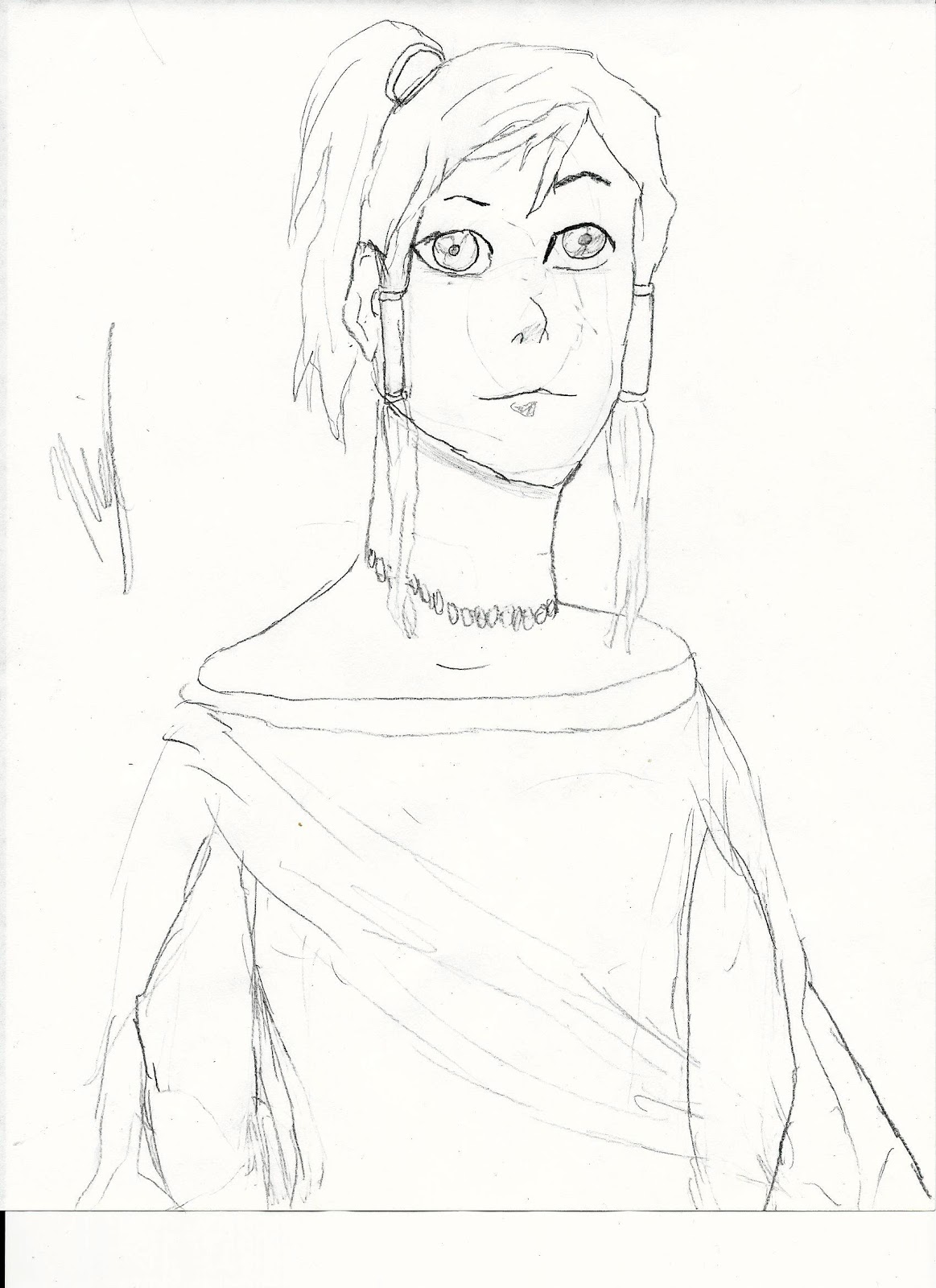
     Best Art Director


    This picture I drew is my rendering Susanna from the book A Break with Charity. Susanna is the protagonist of the book and so far she has proven to be an interesting character. She is a character with conflicting actions that make her appear human. Her views on her religion that she has been raised in are unsure, which makes for an interesting family situation.        

    Susana Reg Contrast.jpg

Octavian Nothing (Ani, Asher, Megan, Ned, Gabe)

Discussion Questions (Ani):


1)  Discussion Question #1

Why did M.T. Anderson choose to put in so many letters with reports of Octavian? What was the significance in the story?
  • Ani: The letters signified Octavian’s moving around and never staying in one place, both physically and mentally. Octavian’s state of mind was very temporary and never concrete.
  • Ned: It was interesting to see Octavian’s adventures through the eyes of others. It is often good for a writer to write at least a little in a second voice.
  • Megan: I think it was just because the most important thing going on was the search for Octavian. This was a creative way to show the people searching and Octavian in the same lens.
  • Gabe: Because everyone wanted to find him and i was a creative way to show the they were looking for him.
  • Asher:Because He was interested in Octavian. He knew that Octavian was hiding something and he was trying to figure it out. Maybe he thought that writing it down would give him some sort of clue.

2) Discussion Question #2

Why did Octavian agree to travel with the soldiers? Was he in need and had to, or did he really want to?
  • Ani: Octavian wanted to survive. He made the choice of traveling with the soldiers because it was the best chance he had of surviving. In his mind, it would be harder to catch him while he was in with the soldiers than while he was at the inn.
  • Ned: A combination of both. Traveling with the soldiers was the best way to survive, but Octavian also believes in the cause of liberty.
  • Megan: I think that first Octavian simply had to to survive but then discovered that through physical labor he could direct his sadness into motivation.
  • Gabe: I think the he wanted to survive. It was his best chance.    
  • Asher:He was trying to be something again. He wanted to serve a purpose and this was the best way he knew how.

3) Discussion Question #3

On page 288, Private Evidence Goring proclaims that “Prince seemed to Desire Nothing.” Does this have anything to do with the title of the book, Octavian Nothing? Why?
  • Ani: This may be part of the meaning behind the title, but it was not the entire meaning. Octavian was still struggling with many things in his life that had more of an affect on the fact that he did not desire anything.
  • Ned: This does not directly tie to the title, but “nothing” is just sort of a motif throughout the story.
  • Megan: I think no because it is common to become depressed and refuse food when you are suffering the loss of a loved one.
  • Gabe:  I agree with Asher, because when you find out that a loved one is dead you don’t want to do anything for a little bit.
  • Asher:Yes and No. I think it has multiple meaning. Like when he said that he was nothing when he found out they were dissecting his mother. He only desires nothing because he knows he will lose it again.

4) Discussion Question #4

On page 305, there is a letter describing Octavian’s capture and the means used to restrain him. “We have nonetheless restrained him with (a) shackles on his hands, (b) shackles on his feet, and also with (c) and iron mask with a bit that prevents him from biting or speaking.” Does this describe the mask on the cover? If so, what is its significance in the story?
  • Ani: The mask is the same and has been referred to before. The mask signifies Octavian’s “freedom”. The point of the mask is to keep the slave from speaking or biting. Octavian has a relative amount of freedom in the household at the beginning of the book, but his voice, opinions, and wants are never heard.
  • Ned: Yes. The mask had been mentioned before, as “a helmet of metal.” It represents how Octavian seems like he is unable to voice his opinion about anything throughout the story.
  • Megan: I think that the mask is the same and it occurs multiple times in the book. It is a symbol that represents the lack of humane treatment and power than Octavian, and all slaves, have.
  • Gabe: Yes, it was a symbol that shows that he is a slave.  
  • Asher: Yes, because it describes the mask in the story. The mask signifies dealing with resistance. When Octavian talked and argued with Mr. Sharpe he put a mask over Octavian’s head. Silencing him. This signifies that he won’t let him resist against slavery. He won’t let him experience freedom.


Vocab(Megan):


  1. Requisition
As it Appears in the Novel: (269) Capt. Draper desired we Requisition the horses for the cause- most, to...
Definition: To demand the use or supply of, especially by official order and for military or public use.
Part of Speech: verb
New Sentence: The president announced that we could requisition our water again since the drought had passed.
  1. Fructify
As it Appears in the Novel: (273) Mr. Symes, dreaming on the possibility of Mrs. S. fructifying, inquired of Mr. Wheeler...
Definition: To make (something) fruitful or productive.
Part of Speech: verb
New Sentence: The new intern, with her positive attitude, fructified the office.

  1. Impertinence
As it Appears in the Novel: (273) … Mr wheeler -never the most loose tongued, & dumbfounded by the Impertinence of the question- replied not...
Definition: Lack of respect; rudeness.
Part of Speech: noun
New Sentence: The King ordered the baker, who was full of impertinence, beat for his small, resentful remarks towards his Majesty.

  1. Revetment
As it Appears in the Novel: (278) So struggling, we reached our pitiful Revetment.
Definition: A retaining wall; a barricade of earth or sandbags.
Part of Speech: noun
New Sentence: We had faith in our ability to surpass the enemy revetment, for it was weak and little.


  1. Jubilation
As it Appears in the Novel: (278) … Sounds of jubilation & a detachment of Militiamen...
Definition: A feeling of great happiness and triumph.
Part of Speech: noun
New Sentence:  The runner broke through the ribbon with jubilation.


Rhetoric (Ned):

  1. Device #1

On page 243, A man named Elijah Tolley writes to Mr. Gitney, telling of his encounter with Octavian. He uses the following SIMILE: “I looked at him, standing against the gun,and it was like he was dead already…”


  1. Device #2

On page 254, When Private Goring questions Octavian, Goring asks if Octavian had recently lived in a house with a family. Octavian responds with the following METAPHOR: “I have never even dwellt inside myself.” Octavian is saying that he does not even know his own identity very well, and hasn’t had much time to figure it out.

  1. Device #3

On page 286, Private Goring writes, in his letter to his sister, the following example of PERSONIFICATION: “Boston sits upon the Water, & it is Unknown; & we await for it to vomit forth its Hordes…” This is personification because a city cannot sit or vomit, although a human can.


Context (Asher):

By 1775, tensions between the American colonies and the British government approached the breaking point, especially in Massachusetts, where Patriot leaders formed a shadow revolutionary government and trained revolutionary war.
In June 1775 congress had George militias to prepare for armed conflict with the British troops occupying Boston.  
This was the Washington besiege the city of boston which was the “redcoats’” base. The siege started the Revolutionary war.
The siege began on April 19th and ended on March 17
Before that fights had broken out at Bunker hill, Lexington and others.
        Sites
History.com
Mountvernon.org
en.wikipedia.org


Art (Gabe):

pg. 250,  “..., thou most Perfect of Sister & thou most Sweet of Siblings & may Blessings settle like a Mess of Doves all over thy hair.” - yr Ev.


With this picture that I drew, I took it literally. So I drew doves in thy hair. I think what they are trying to say is that, hopefully a lot of blessings will come to you.